How we lay artificial grass
- Dig out the old lawn. We take out the turf and soil, typically to somewhere between 75mm and 100mm depending on the ground, and take it away.
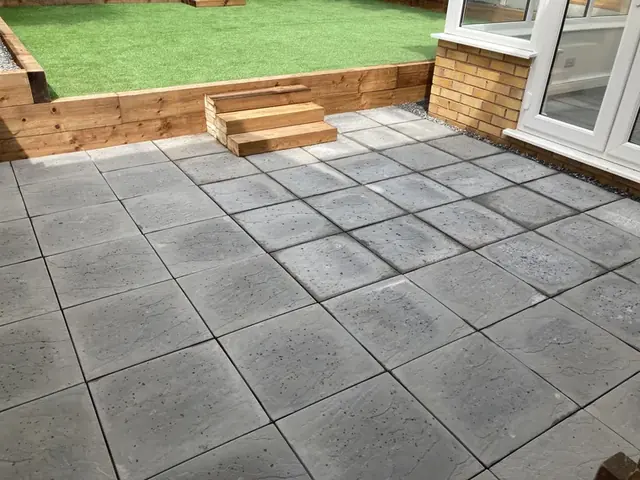
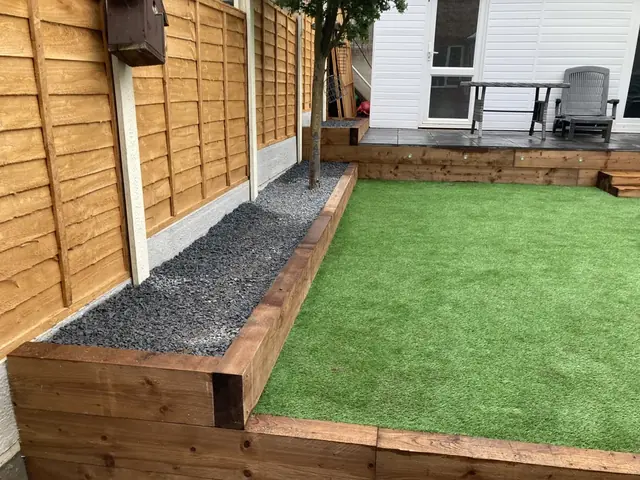
- Edging. A solid edge all the way round, whether that's a paved border, timber, sleepers or an existing wall, so the grass has something to fix to and can't creep.
- Sub-base. A layer of crushed stone, compacted, for strength and drainage.
- Laying course. A finer layer of granite dust or sharp sand on top, compacted and levelled so no dips or bumps show through.
- Weed membrane. Stops anything growing up from underneath.
- Grass. Rolled out, cut in, and joined with joining tape and adhesive so the seams disappear, then fixed at the edges and brushed up.
- Kiln-dried sand. Brushed in where the grass calls for it, to weigh it down and help the fibres stand up.
Case study: garden transformation, Stafford
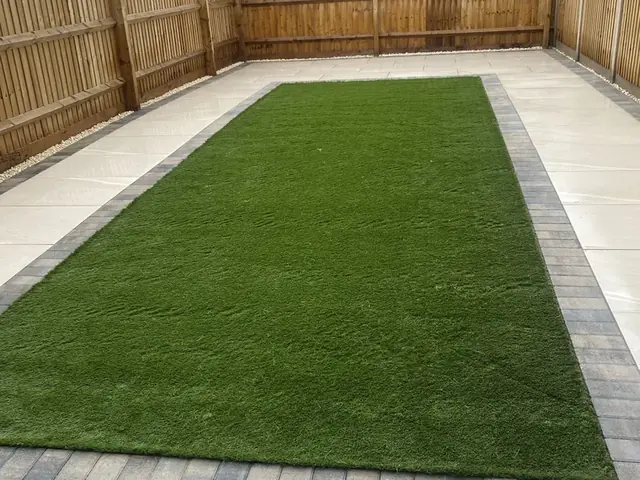
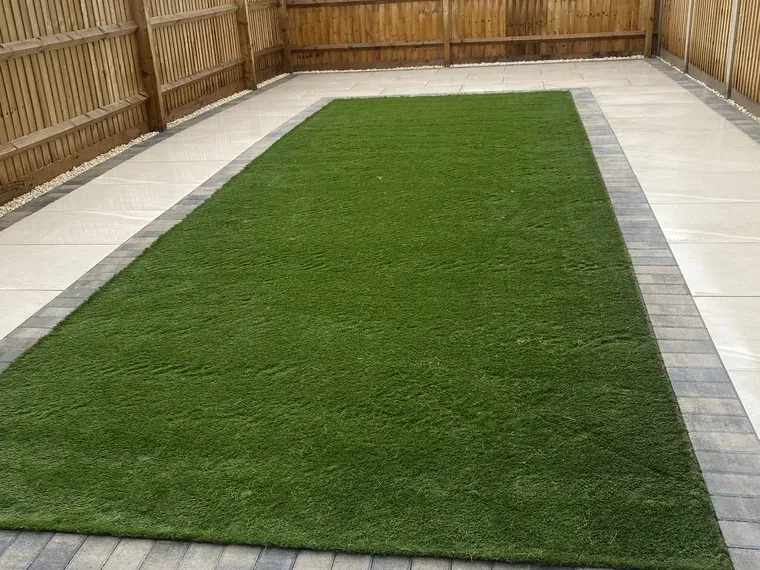
Artificial grass laid on a proper base, framed by block paving and porcelain. A new-build garden taken from bare, weedy soil to finished in a few weeks.
Choosing the right grass
Artificial grass varies a lot. The main things worth looking at:
Pile height
Usually somewhere between 25mm and 40mm. A shorter pile looks like a freshly cut lawn and is easier to keep tidy. A longer pile looks lusher but can flatten in heavy-use areas.
Colour and feel
Better grasses mix a couple of shades of green with a brown or beige thatch near the base, which looks far more natural than one flat green.
Heavy use
Kids, trampolines and dogs need a hard-wearing grass. We'll point you towards something that suits how the garden actually gets used.
Sun and heat
Artificial grass can get warm in full sun, and some products are designed to stay cooler. Worth bearing in mind in a south-facing garden.
We'll bring samples so you can see and feel them in your own garden before you choose.
Artificial grass and dogs
It works well with dogs, as long as the base is built to drain. Wee runs straight through the backing and the stone underneath, so the main jobs for you are picking up and giving the area a hose down now and then. In hot weather, a pet-safe artificial grass cleaner helps keep smells down.
What affects the price
- The size of the area, and how many cuts and joins it needs
- The grass you choose, which is a big part of the cost
- How much needs digging out, and whether there's an old patio or concrete to break up
- Edging. Reusing a sound existing border costs less than building a new one
- Access to the garden for materials and waste
Recent artificial grass work
What the customer said
Craig and Dylan transformed my garden after I moved into a new build with no turf and an uneven garden. They dug out and levelled the area, laid porcelain tiles and artificial grass, and finished everything off with the borders. They worked quickly and efficiently, were upfront about the costs and scope of the job, and delivered exactly what was agreed. I’m really pleased with the result and would thoroughly recommend them!
Artificial Grass: your questions
Does artificial grass need any maintenance?
A little. Brush it every few weeks to keep the fibres standing up, blow or rake off leaves, and hose it down now and then. No mowing, feeding or weeding.
Can you lay it on top of concrete or an old patio?
Yes, if the surface is sound and water has somewhere to go. We'd use a foam underlay so it feels softer and the slab joints don't show through. We'll check the drainage first.
Will it drain after heavy rain?
If the base is right, yes. Water passes through holes in the backing and down through the stone. That's why we never lay straight onto soil or clay.
How long does artificial grass last?
A good-quality grass on a proper base lasts many years. How long depends on the product and how hard it's used. Manufacturers usually give a guarantee against fading, and we'll show you what comes with the grass you pick.
