Choosing your slabs
Porcelain
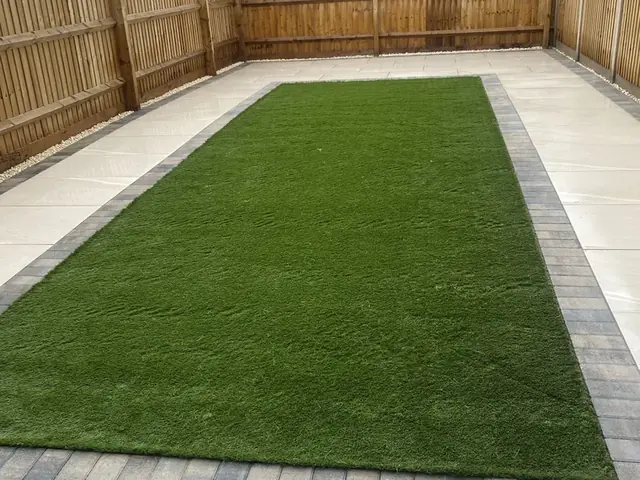
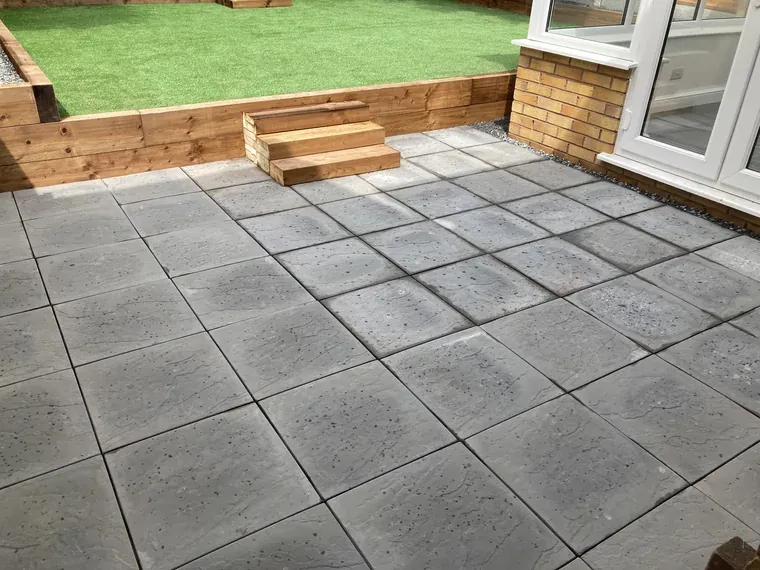
Dense, hard-wearing and barely absorbs water, so it shrugs off stains and moss. A clean, modern look with crisp edges. It needs special blades to cut and a primer on the back of every slab, which is why it costs more to lay.
Natural stone
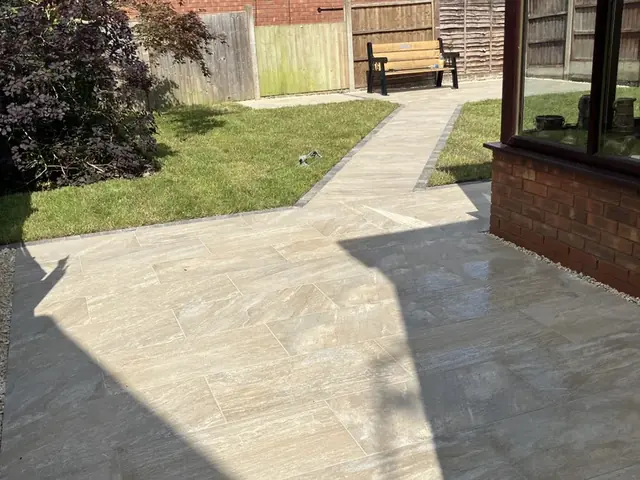
Indian sandstone, limestone and slate. Every slab is slightly different, which gives a softer, more traditional look. It benefits from sealing and an occasional clean.
Concrete slabs
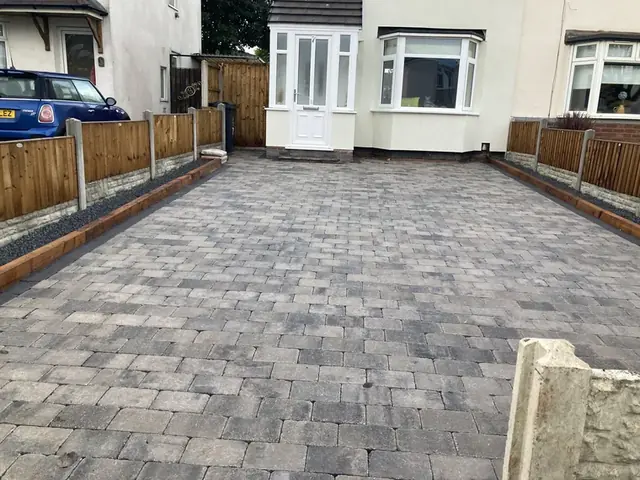
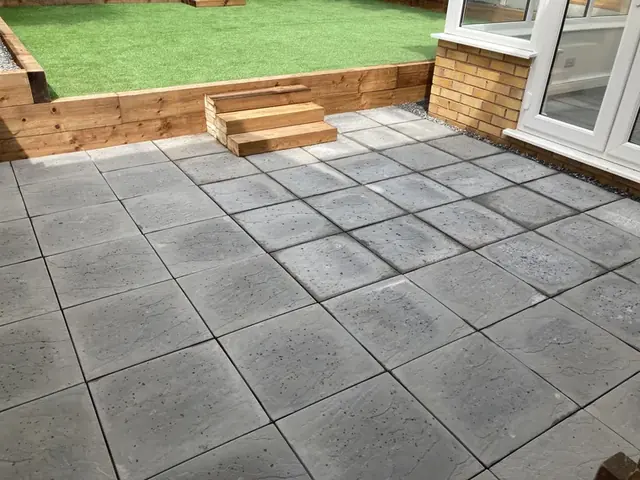
The budget-friendly option, and modern concrete slabs come in far more finishes than they used to, including riven and textured surfaces that look like stone.
A mix
A porcelain patio with a block-paved border, or a stone path leading to a slabbed seating area. Mixing materials is a good way to mark out different parts of a garden.
Case study: garden transformation, Stafford
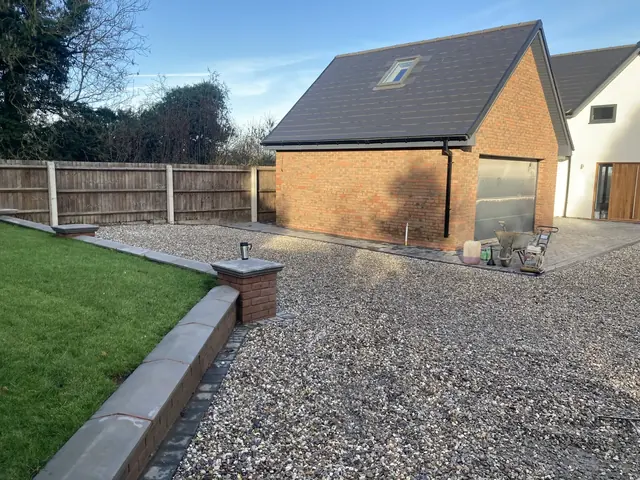
A porcelain patio laid right round the garden, with a block-paved border. A new-build garden taken from bare, weedy soil to finished in a few weeks.
How we lay a patio
The difference between a patio that lasts and one that rocks and cracks within a couple of winters is almost all in the preparation.
- Dig out and sub-base. We excavate, then lay and compact a crushed stone sub-base so the patio has something solid to sit on.
- Set the falls. A patio should fall gently away from the house, so rain runs off rather than sitting on the surface or running towards your walls. We set the levels with string lines before a single slab goes down.
- Keep below the damp course. The finished patio should sit at least 150mm, roughly two brick courses, below your damp-proof course so rain splashing up can't bridge it. If the ground is too high, we lower it.
- Full mortar bed. Every slab goes down on a full bed of mortar, not five blobs at the corners and middle. Spot bedding leaves hollows underneath that collect water and crack slabs.
- Primer for porcelain. Porcelain is so dense that mortar won't grip it on its own, so each slab gets a bonding primer on the back before it's laid.
- Pointing. Joints filled with mortar or a jointing compound, and the surface cleaned off before we leave.
Paths, steps and edging
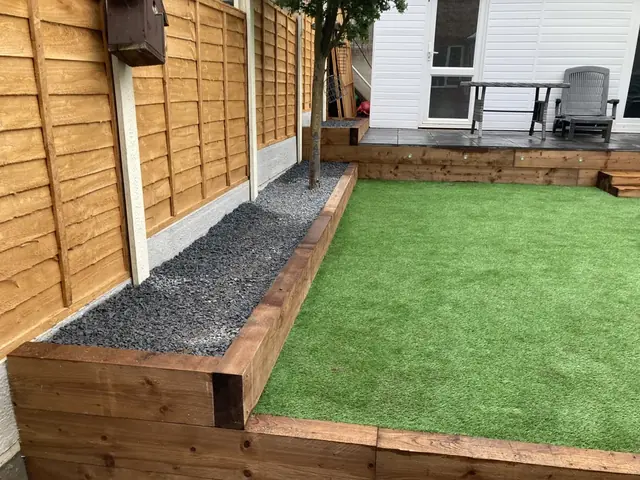
Slabbing isn't just patios. We lay paths down the side of the house and across the garden, steps between levels, and bases for sheds and greenhouses. Where a patio meets a lawn or border we put in a proper edge so it stays crisp, and where it meets a raised bed or wall, we can build that too.
What affects the price
- The size and shape of the area. Curves and lots of cuts take longer
- The slabs you choose. Porcelain costs more to buy and to lay than concrete
- What has to come out first: old slabs, concrete, turf or soil
- How far the ground needs lowering to sit below the damp course
- Steps, walls, edging or drainage built at the same time
- Access to the back garden, especially if everything has to come down a narrow side passage
We'll measure up, talk through options at different price points and give you a free quote.
Recent patios & slabbing work
What the customer said
Craig and Dylan transformed my garden after I moved into a new build with no turf and an uneven garden. They dug out and levelled the area, laid porcelain tiles and artificial grass, and finished everything off with the borders. They worked quickly and efficiently, were upfront about the costs and scope of the job, and delivered exactly what was agreed. I’m really pleased with the result and would thoroughly recommend them!
Patios & Slabbing: your questions
Is porcelain slippery when it's wet?
Outdoor porcelain is made with a textured, anti-slip surface. It's a different product from the polished tiles you'd use indoors. Like any hard surface it can get slippery if moss or algae builds up, but porcelain is far less prone to that than stone.
How soon can we use the patio?
You can usually walk on it carefully after a day or two, once the mortar has gone off. Leave heavy furniture and barbecues a few days longer. We'll tell you for your particular job.
Can you lay a new patio over the old one?
Occasionally, if the old one is solid and the levels allow. Usually the extra height would bring it too close to the damp course, so it has to come up. We'll tell you straight once we've seen it.
Do I need to seal natural stone?
It isn't essential, but a good sealer helps sandstone resist staining and makes cleaning easier. Porcelain doesn't need sealing at all.
Can you build a patio on different levels?
Yes. Split-level patios, steps up to a lawn and retaining walls between levels are all part of what we do.
