Plastering jobs we take on
- Skimming. A thin finishing coat over sound existing plaster to get rid of cracks, dents and old patch marks.
- Board and skim. Where old plaster is blown, crumbling or too uneven to skim, we take it back and fix new plasterboard before skimming.
- Ceilings. Skimming tired ceilings, including covering textured and artexed finishes.
- Patch repairs. Filling in after rewires, new plumbing, removed fireplaces or damage, blended into the wall around it.
- Making good. Around new doorways, windows and openings once the building work is done.
Before and after: a bedroom re-skim
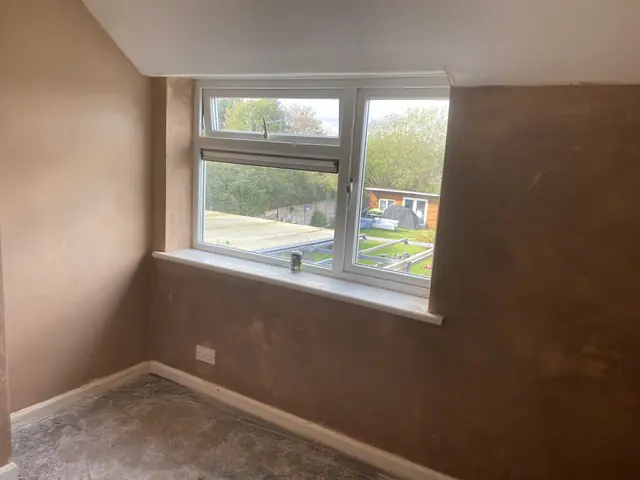
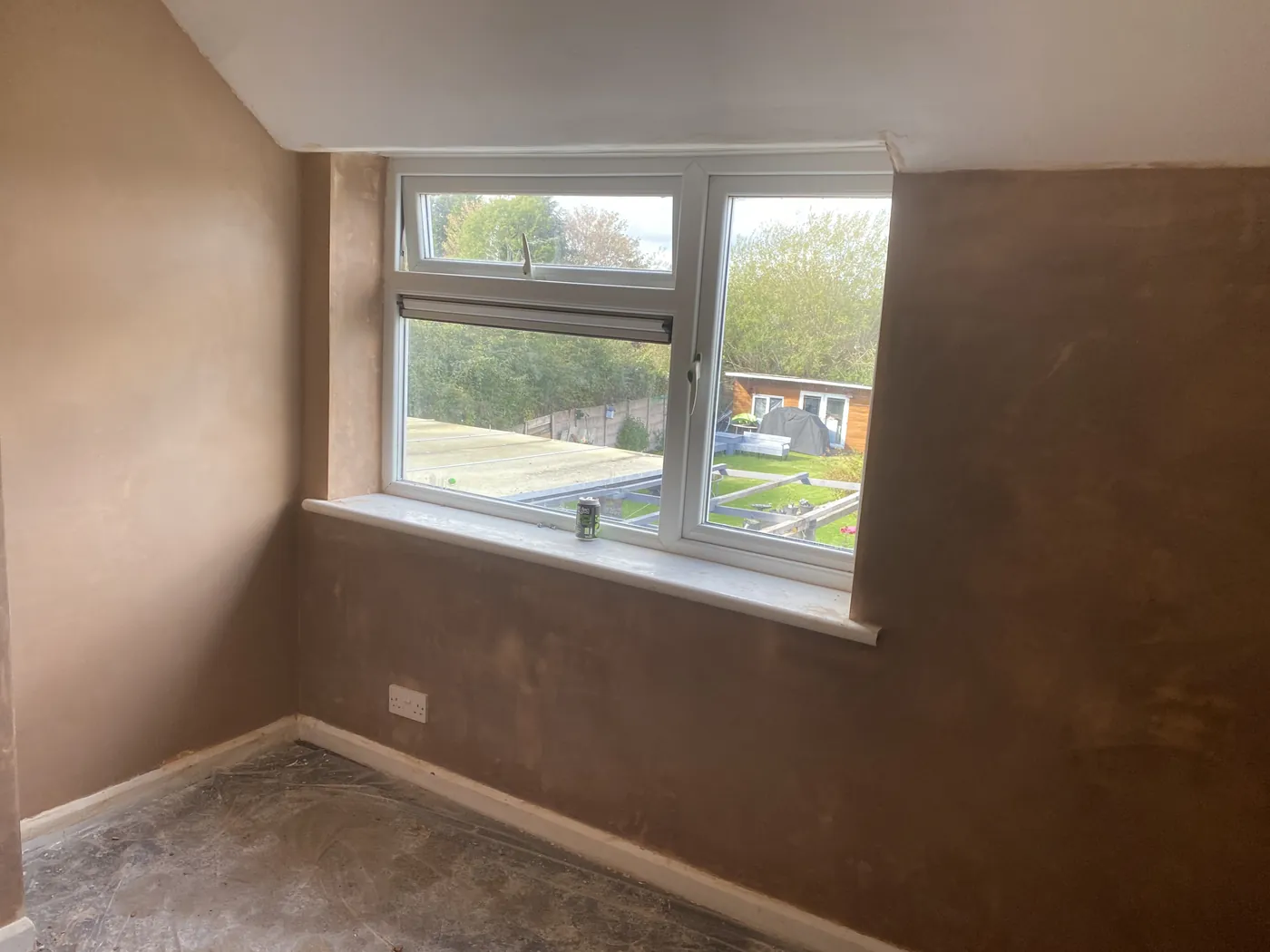
This bedroom had years of patched, uneven walls showing through the old paint. We skimmed it throughout, chimney breast included, leaving smooth, flat walls ready for a mist coat and decorating. The new plaster is still drying in the after shots, which is why it looks patchy brown. It lightens to an even pink as it dries.
Window wall
Radiator wall
Skim or re-plaster?
If the existing plaster is sound, a skim coat is usually all a wall needs. You can get a rough idea by tapping it. If it sounds hollow, or the plaster is coming away, crumbling or bulging, it's "blown", and a skim over the top won't last. Those areas need hacking off and replacing, either with backing plaster or plasterboard, before the finish coat goes on.
We check every wall when we come to quote and tell you which ones need what, so there are no surprises once the job's started.
Artex and textured ceilings
Plenty of older houses still have artexed ceilings. Rather than scraping them off, the usual approach is to skim straight over the top for a flat, modern finish.
Worth knowing Textured coatings applied before about 2000 can contain small amounts of asbestos. It's harmless left alone, but it shouldn't be sanded, scraped or drilled until it's been tested. If you have an older textured ceiling, we'll talk you through getting a sample tested before any work starts.
Getting the room ready, and afterwards
Plastering is messy work, so we sheet up the floor and protect anything staying in the room. It helps if you can clear out as much furniture as possible and take down curtains, pictures and shelves beforehand.
New plaster has to dry out fully before you paint it. That can be anything from a few days for a skim coat to a couple of weeks or more for thicker plaster, depending on the weather and how well the room is ventilated. It's ready when it has turned an even, light pink with no darker patches. You can see the darker, still-wet patches in our chimney breast photo further down this page. Start with a mist coat, which is watered-down emulsion, so the paint soaks in and grips rather than peeling.
What affects the price
- The size of the room, and how many walls and ceilings need doing
- Whether it's a skim or a full re-plaster
- How much old plaster or wallpaper has to come off first
- Ceiling height and access
- Making good around sockets, switches, coving and window reveals
More plastering work
Plastering: your questions
How long does it take to plaster a room?
A straightforward skim on an average room is often a day or two. Re-plastering takes longer because of the extra stages and the drying time between coats.
Can you plaster over wallpaper?
No. Wallpaper has to come off first, otherwise the moisture in the plaster lifts it and the finish blisters. If you'd rather not strip it yourself, we can include it in the price.
When can I paint new plaster?
Once it has dried to an even light pink all over, which can take anything from a few days to a few weeks. Use a mist coat first.
Will there be dust everywhere?
Skimming itself makes very little dust. The dusty part is hacking off old plaster, and we sheet up and close off the room as best we can.
